How it works

Turn listening into practice.

Hear a song in your key, sing with its accompaniment, or study how a phrase is sung. AI models and audio algorithms prepare the recording. The Ragafied player lets you choose what to hear, how fast it plays, and what to repeat.

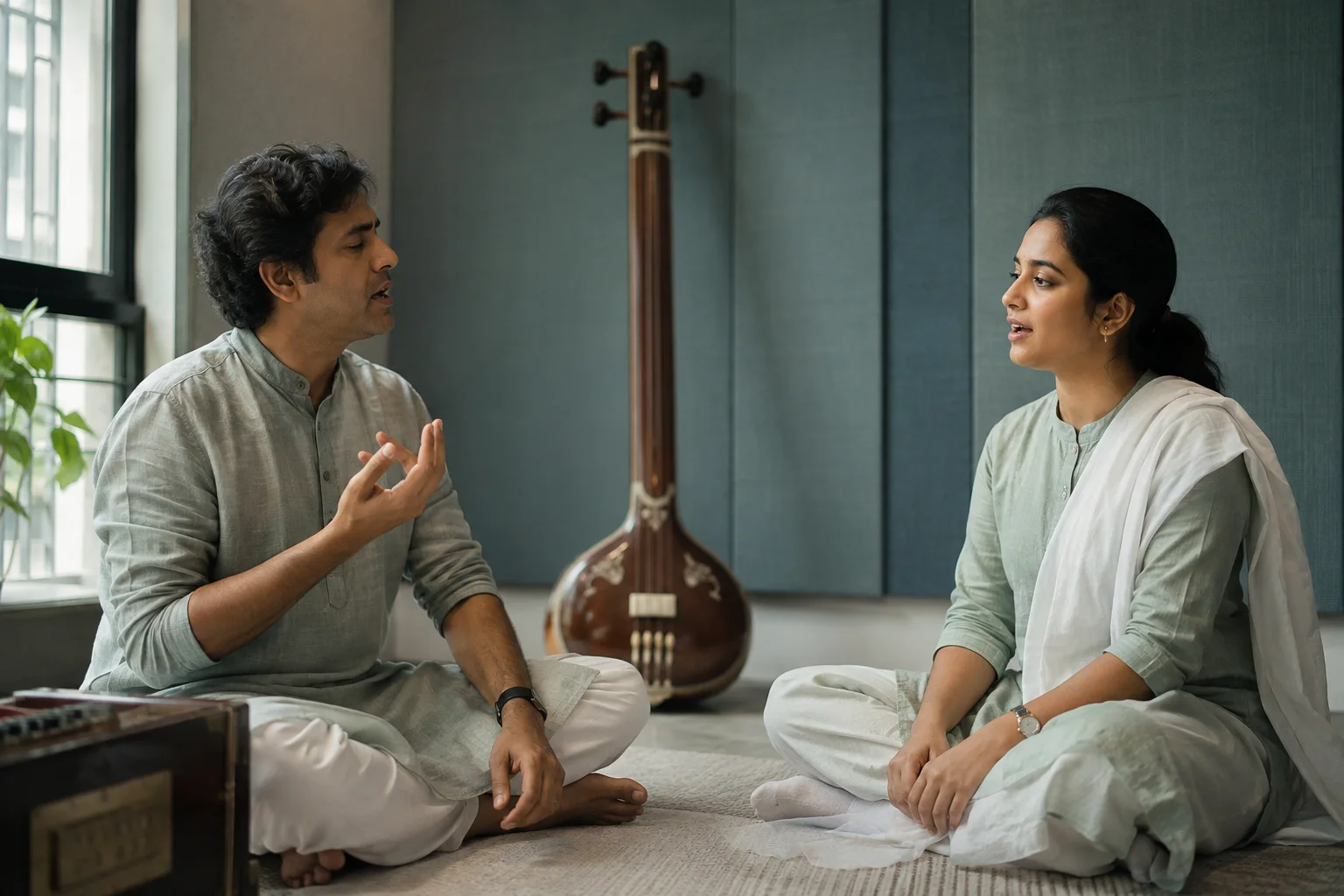
A music teacher demonstrates a phrase to a student

Start with the music you want to sing.

Paste a YouTube link or upload a recording you have permission to use. It can be a song for fun, a line you want to learn, a classical exercise, or a performance you want to study.

  1. Singer

    Add a recording

    Paste a YouTube link or upload audio that you own or have permission to use.

  2. Ragafied

    Prepare the music

    AI separates the voice and accompaniment. Audio analysis suggests segments and maps the vocal pitch.

  3. Singer

    Make it comfortable to sing

    Choose your key and tempo. Play end to end with the original vocal on or off.

  4. Learner

    Practice a section

    Turn on segments to work on one passage. Listen, sing, or let the player alternate between the two. Loop the segment while you practice.

  5. Learner

    Learn with a teacher · Private beta

    Teachers can arrange their demonstrations and instructions into guided lessons. Lesson creation is in private beta. Contact team@ragafied.com to ask about access.

The technology behind your practice

Serious audio science. Made for singing.

Behind every vocal you isolate, phrase you repeat, and note you compare is a combination of AI models and custom audio algorithms. They bring the details of a performance closer, so you can spend more time singing and less time preparing.

Ragafied audio technology

Preview

Neural Stem Separation

Sing with the original accompaniment.

Neural audio separation estimates the voice and instruments within a mixed recording. Ragafied turns those estimates into synchronized stems: separate audio parts you can control together or on their own.

Hear the singer clearly, then take your turn with the accompaniment.

Ragafied audio technology

Adaptive Phrase Detection

Find the phrase worth repeating.

Custom signal analysis follows changes in vocal energy and pauses to suggest phrase boundaries. These become navigable practice segments, with room before and after each phrase to hear it in context.

Move through a song phrase by phrase, or repeat one passage until you are ready to continue.

Ragafied audio technology

Continuous Pitch Mapping

See how the notes move.

AI pitch estimation maps the voice’s fundamental frequency over time. A continuous contour shows the movement within and between notes, bringing slides, vibrato, and gamakas into view.

Follow the shape of a phrase as you listen, then slow it down for closer study.

Ragafied audio technology

Independent Pitch & Time Control

Your range. Your pace.

Digital signal processing changes pitch and duration independently while keeping the vocal and accompaniment synchronized. Transpose a song without changing its speed, or slow a passage without lowering its notes.

Find a comfortable key and work up to the original tempo as you learn.

Ragafied audio technology

Spectral Tonic Fusion

Give the melody its Sa.

Fast Fourier Transform (FFT) analysis reveals frequency patterns in the recording. Our tonic algorithm combines spectral evidence with vocal pitch information to estimate Sa, the reference note used to read the melody in sargam.

Study how notes relate to Sa, as well as how they rise, settle, and slide.

Ragafied audio technology

Preview

Live Pitch Tracking

Watch your voice meet the melody.

Streaming pitch detection estimates your vocal frequency as you sing. During segment practice, the player places your pitch alongside the reference so you can compare the two. Microphone analysis runs in your browser.

Notice where a note settles above or below the reference, then listen and try it again.

Ragafied audio technology

Preview

Progressive Rhythm Detection

Follow the pulse as it changes.

Progressive rhythm analysis follows the pulse as a performance speeds up or eases back. Tempo drift support accounts for changing beat intervals, giving rhythmic practice a reference that follows the performance.

Study the timing of a phrase in a performance whose tempo changes naturally.

Try the Ragafied player.

Hear the playback controls with sample audio, then explore what you can practice with your own music.

Try the player